
The apartment was, by any reasonable standard, a mess. Clothes draped over a chair, dishes in the sink, a stack of mail that had been "dealt with" by being moved from the counter to the floor.

Two minutes. That is the number that matters in habit formation. Not twenty-one days, not thirty, not the arbitrary figure from the self-help shelf.

Sunday evening has a bad reputation among productivity writers. It gets cast as the last wall between a person and the workweek, a stretch of hours to be defended against the coming Monday.

Accountability partners occupy a strange place in the self-improvement economy.

Ten minutes a week is a strange amount of time to promise anyone. It is roughly the length of a coffee break, two songs, the walk from a train platform to a front door.

Home wins on paper. No commute, no monthly fee, no stranger hogging the squat rack.
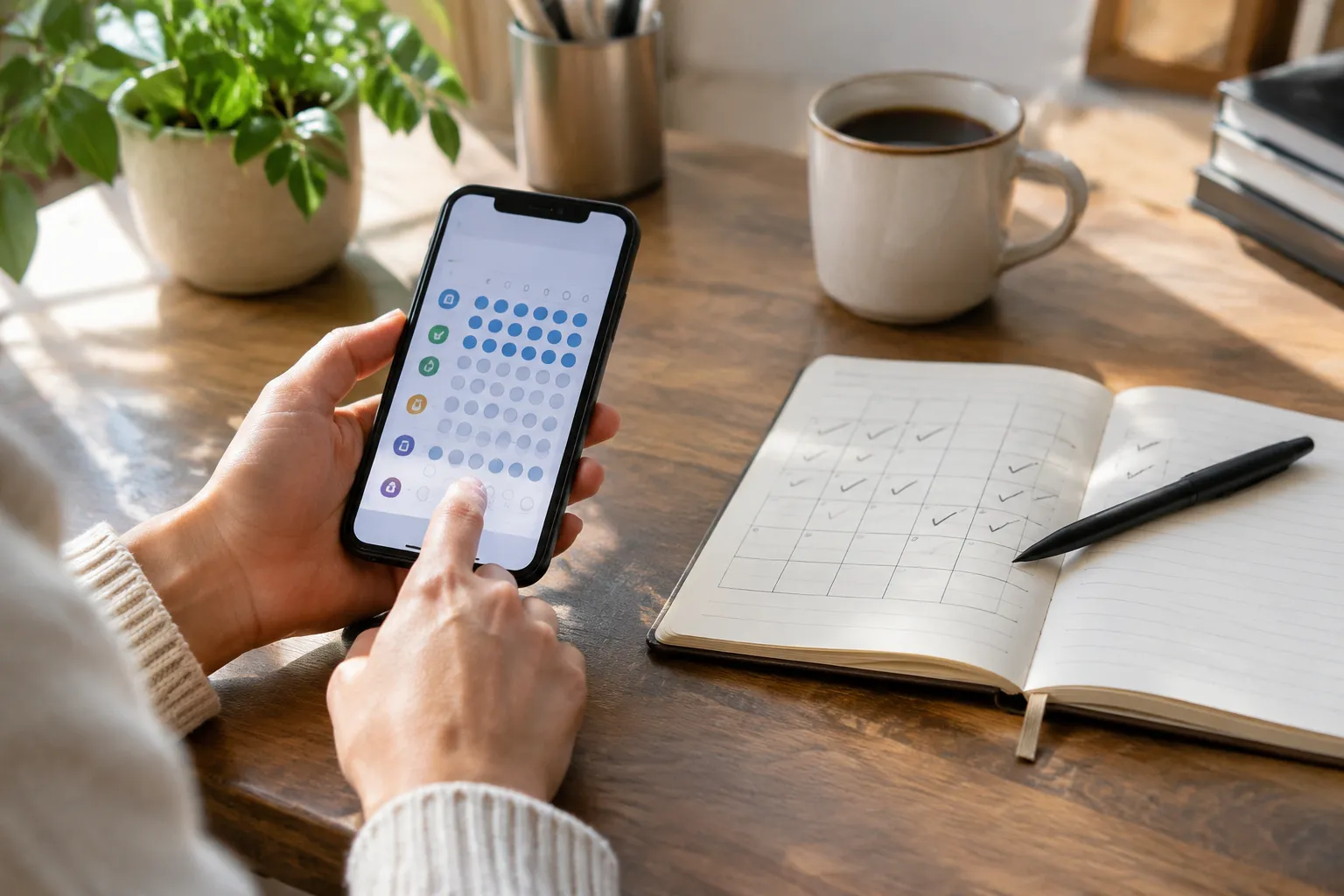
Paper planners sell in the tens of millions every year, and habit apps are downloaded just as fast. Both promise the same thing: a small daily ritual that turns intentions into routines.

Habit stacking is a technique for attaching a new behavior to an existing routine so the established habit becomes the cue for the new one.

Cheap tools have a bad reputation for a reason. The two-dollar vegetable peeler that buckles on a carrot, the five-dollar headlamp whose strap snaps in the cold, the kitchen scale that drifts forty gr

Two flights of stairs, taken twice, with a laptop bag on one shoulder. A walk to the far coffee shop instead of the one in the lobby.
- 1
- 2